React Native vs Flutter: Which Cross-Platform Framework Wins in 2026?
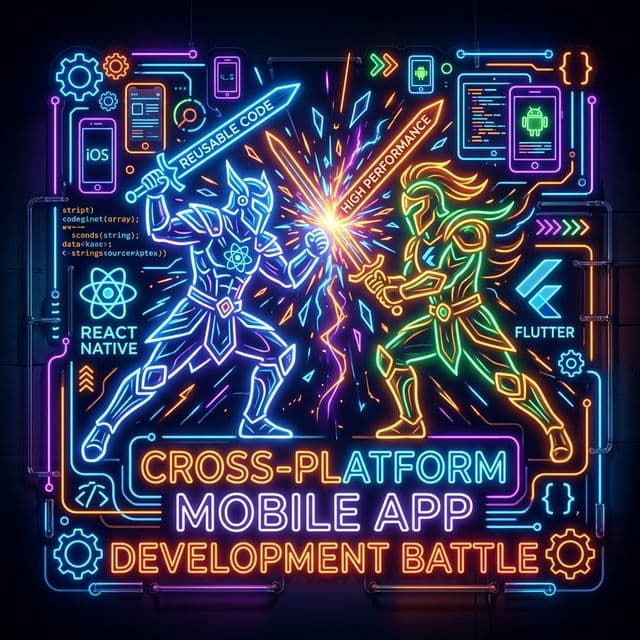
Building two separate apps for iOS and Android in native Swift and Kotlin is incredibly resource-heavy. Cross-platform frameworks have matured to become the industry standard, allowing a single codebase to deploy beautiful, high-performance apps to both stores. But the war between React Native (Meta) and Flutter (Google) rages on in 2026.
React Native uses JavaScript and native rendering, meaning it integrates flawlessly into the massive web development ecosystem. Companies with existing React expertise can pivot to mobile rapidly. Flutter, built on Dart, bypasses OEM widgets and draws its own UI using the Skia/Impeller graphics engine, resulting in incredibly smooth animations and pixel-perfect consistency across devices.
At Blore Agency, our choice depends strictly on project requirements. Fast-paced startups needing deep integration with existing web backends thrive on React Native. Projects requiring highly customized UI elements, complex animations, or IoT bluetooth connections often lean towards Flutter.
Success Story
"We transitioned a client's dual-codebase setup (Swift/Kotlin) into a unified React Native architecture. This strategic move halved their maintenance costs, doubled their feature deployment speed, and ensured simultaneous multi-platform rollouts across Android and iOS."